Travel reporting isn’t all about opulent hotels and spa treatments. Today, though, it is. I’m reposing in that opulent style to which I’m not accustomed, being relaxed in a yogic serenity in the hands, or rather under the hands of an experienced masseuse, all as a courtesy of the Four Seasons in Limassol. It’s been a joyous experience, and the best has been saved until last, that much is for sure. Nevertheless, within this inner tranquil, on an island of serenity, there’s time to reflect on a journey that’s taken in the cardinal points of Cypriot diversity.

So, to Paphos, a westernmost outpost, already familiar to many of us, but perhaps only from the sun deck of the town’s ample supply of quality holiday accommodation. There’s much more to see, which makes for a fulfilling visit, and still leaves enough time to fulfil the obligation to gently brown under the Mediterranean sky.
The Paphos Archaeological Park and the Tombs of the Kings (both UNESCO World Heritage Sites) are the heavy hitters of the Cypriot heritage scene.
For a hands-on moment, "The Place" in Pano Paphos is a goldmine. We participated in a mosaic-making workshop that was surprisingly therapeutic. It’s a way of connecting with the Roman artisans who did the same thing on this very spot two thousand years ago.
The coastline is dominated by a stack of sea-worn limestone known as Petra tou Romiou. To the geologist, these rocks are a dramatic punctuation mark in the story of tectonic plate collisions, a remnant from the long-vanished Tethys Ocean, forced upward to create dry land. To the Cypriots of today, however, they represent two layers of national identity. Both beauty and defiance in one.
The first legend is delicate: the white foam churning around the base of the largest rock is said to be the birthplace of Aphrodite, whose beauty needs no further introduction. The rock's name, however, tells a more rugged story. Petra tou Romiou, or ”Rock of the Greek”, is named after a legendary Byzantine hero Digenis Akritas. The story goes that, possessed of supernatural strength, Digenis, gripped the Kyrenia mountain range with his bare hand, which folklore claims left behind the famous five-fingered peaks of Pentadaktylos, and hurled this massive boulder into the sea to crush a fleet of Saracen invaders. Whether true or not (my money is on “not”) the theme of invasion is a recurring one in the long history of Cyprus. We are but the most recent and possibly most benign in a long line of those who have sailed the seas to bask in the warm riches of this uniquely blessed isle.
Today, Petra tou Romiou is a place of pilgrimage where the enduring, protective history of the Byzantine frontier meets the ethereal grace of ancient mythology. It was here, standing amidst the "salt, pepper, and fantasy" of guide Dena’s narrative, that I realised Cyprus in the present day is an island performing a masterclass in the art of reappearing. It is a destination that refuses to be a victim of its geography, choosing instead to lead through resilience, infrastructure, and a hospitality so welcoming, it could almost be classified as a contact sport.
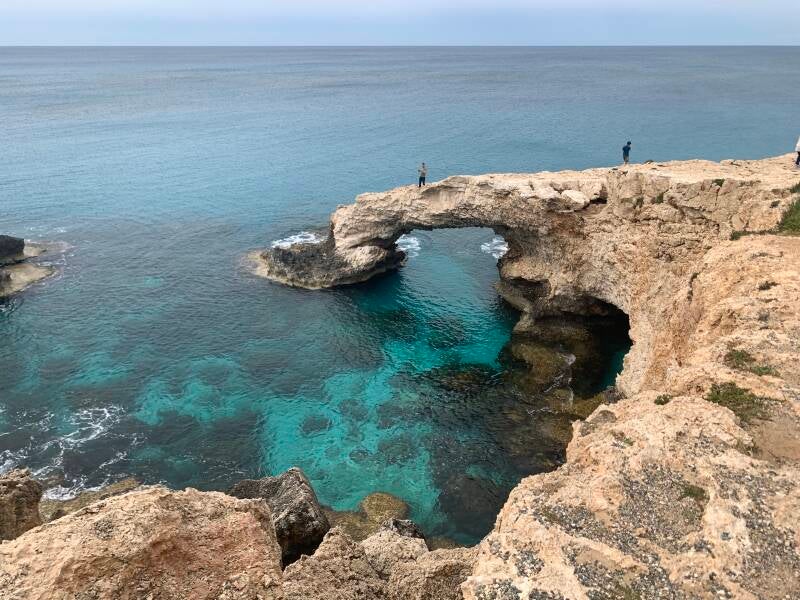
Dawn at the Love Bridge
Now, those westerners don’t have a monopoly on mythology. Right at the other end of the island, so far east it shares tides with the Levantine Sea, the silence of the Love Bridge in the awakening dawn is in stark contrast to the reputation of its location, on the edge of Ayia Napa. Here though, this natural stone arch reaching into the turquoise waters has then feel of a stone temple, piloting you away from whatever hedonistic rave may have gone before. Here, Ayia Napa lives up to its interpreted name -"Virgin Mary of the Forest.”
Long ago, Ayia Napa was a place of retreat, of woodland and seclusion. Now, it’s true that today Ayia Napa and neighbouring Protaras are family-friendly seaside resorts. Why shouldn’t they be - with their storied promenade walk, and Fig Tree Bay, one of the best beaches in Europe, there as a year-round attraction. Should you choose not to club with the cream of international DJs, Ayia Napa is a daytime delight that boasts an exotic location, farther east than Cairo, Ankara or Kiev, and a heritage that’s defiantly up there with the monastery of sound.
Future proofing the island
Perhaps here at Ayia Napa, in a way only rivalled by the divided capital of Nicosia, the poignant reminder of recent Cypriot history is apparent. The misty mountains to the north are a contiguous part of Cyprus, but under a foreign administration. Famagusta, which lends its name to the district, is in exile, as are many of the businesses, which their owners have relocated to other parts of the island. Uniquely, Famagusta Chamber of Commerce represents exiles all over Cyprus, in equal status with the other five districts on the island. It’s an accommodation that’s completely transparent to visitors like us. Cyprus carries on, and makes us as welcome as ever it did.
The clarity of the Cypriot dawn is only ever clouded by the dusty days when the Sirocco blows up from the Sahara. Otherwise, the skies are clear almost every day, and the future is met with equal clarity. This may not be the stuff of contemplation for the majority of visitors, but the island is seeking to remain authentic, while reaching for the modernity of its 2030 vision. The economy is not defined by its prodigious tourism appeal, and Cypriots seem more prepared to make that work than anywhere else.
Up in the hills
Away from the shoreline, Cyprus reveals its hidden facets. In the hinterland and the hills lie a whole crown of jewels.
The emerald is the Cyherbia Botanical Park in Avgorou. Here, the "Scent of Cyprus" is being bottled not as a perfume, but as a philosophy. Amidst the lavender and rosemary, the focus is on "slow travel." It is a sensory explosion that reminds you that Cyprus’s future lies in its soil, not just its skyline. Try not to get lost in the maze.
Climb further away from the sea toward the Troodos Mountains. The topography undergoes a radical transformation. A tectonic shift has gifted us an "Alpine Cyprus" of fragrant pine forests that once served as a sanctuary for the British administration seeking an escape from the coastal summer heat. For a moment, the shimmering vistas of the island’s massive reservoirs mimic the deep-water alpine lakes of Northern Europe. The still recovering scars of summer fires remind us that we are in southern climes, much more susceptible to conflagration.
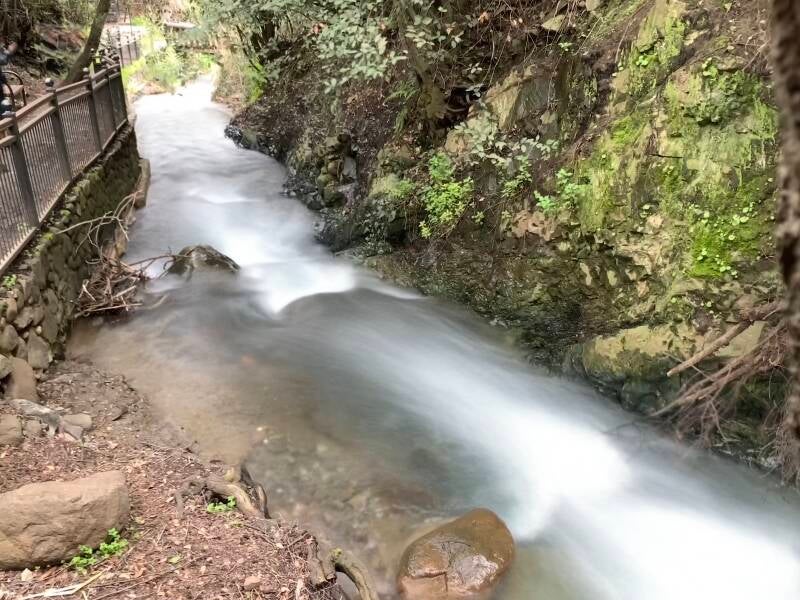
The nineteenth-century Scottish foot soldiers, who did not have the convenience of our well-appointed (and well refrigerated) midibus, marched their way into these foreign hills, and found a place that was so reminiscent of their homeland, they gave it a name that endures to this day: Caledonia Waters. Less Cypriot and more Scottish, the verdant surroundings and waterfall are so reminiscent of the Highlands that those Scottish infantrymen felt homesick no more. It’s a poignant reminder of the long-standing ties between our two islands.
We advanced to the old part of Kakopetria, a village that feels as though it were carved directly from the mountain. The Vateri nature trail offers a gentle walking route leading eventually to Linos Inn. The agrotourism vibe here is authentic, not manufactured. It’s the kind of place where the wine is local, the bread is warm, and the hospitality is unhurried.
Strawberry fields forever
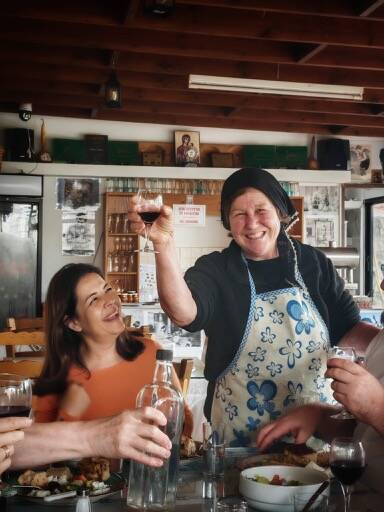
The trip reached its emotional crescendo at Sofia’s House in Letymbou Village. We took part in the rural life, and rolled up our sleeves for a halloumi and bread-making workshop.
Sofia is a woman who works with the rhythm of the seasons and the heat of the oven. She’s been doing it for longer than would be gentlemanly to mention. The preparation of flaouna, the traditional Cypriot cheese pie, is as much a lesson in history as it is in baking. A culinary relic of the Middle Ages, the dish is most often associated with Easter, but making it is a joy at any time. The base is a heavy dough enriched with mahlepi, a fragrant powder made from ground cherry pits, that lends the pastry a musky, late-season scent.
Sofia explains that the name is likely a corruption of the French flan, a remnant of the Frankish Lusignan dynasty. Much like the savoury tarts of Central Europe, the flaouna represents the "multicultural mosaic" of Cyprus, fusing the European traditions with the aromatic spices of the Levant. Watching the bread rise while sipping on a strong Cypriot coffee, confident that it’s your kneaded dough that’s rising, it seems like all the world is content, and the only thing that matters is the heat of the stone oven.
Our explorations took us to Deryneia. The soil here is a deep, iron-rich red, and the strawberries are so sweet they make the supermarket variety back home taste decidedly unsatisfactory. Yet, as you pick the fruit, you are standing in the shadow of the "Green Line”. The sweetness of the fruit is tempered by the bitterness of the divide. It is a reminder that Cyprus is an island of scars, but also an island that knows how to grow something beautiful in the red earth, no matter where the roots are put down.
Chrome and cobblestones in Limassol
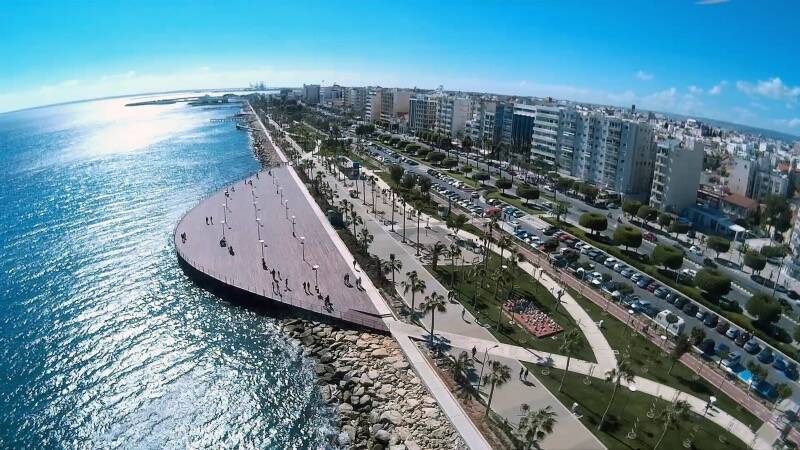
The eastern Mediterranean comes into view on the journey back down to the coast. If Ayia Napa is the island’s sunrise, Limassol is its high-noon engine room. Limassol defies the resort town stereotype. Known as the island’s economic powerhouse, it has spent the last forty years transforming from a quiet coastal stretch into a sophisticated financial and shipping centre. Today, the skyline is a blend of sleek corporate headquarters, many belonging to long-established international shipping firms, and a rejuvenated old town that serves as the island’s entertainment pulse.
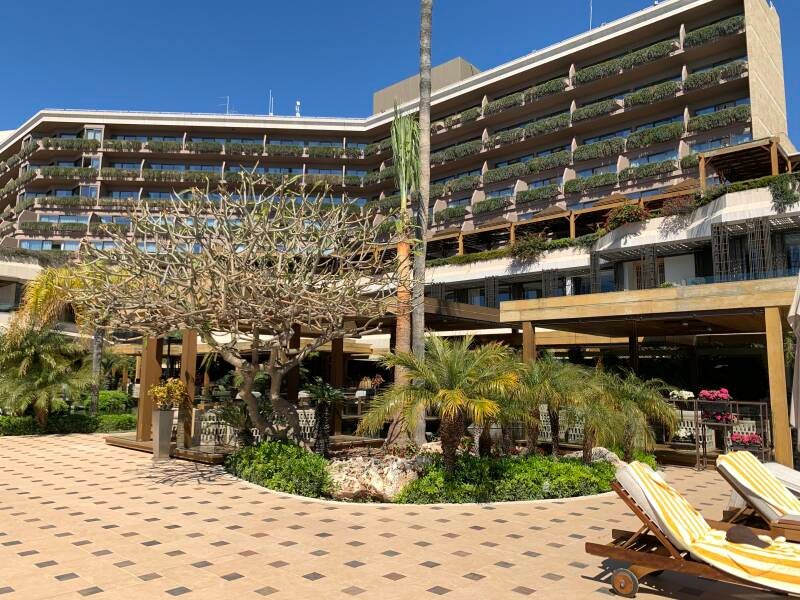
We are hosted at the already mentioned Four Seasons Limassol, a five-star establishment that banishes thoughts of gloomy British days the moment you step from the forecourt to the foyer. The hotel itself is the gold standard for the "Copper Isle”, a reference to the mineral wealth that once made this territory so desirable to would-be invaders, and gives those upper latitudes that characteristic red soil. For a traveller, Limassol is a logistical dream. It is roughly equidistant from the airports at Paphos and Larnaca, and the suburbs are already touching on that hilly hinterland that entices greater exploration. A stay here leaves you wanting for nothing. The Four Seasons itself sits midway on an eight-kilometre pedestrian path that traces the shoreline, a benign, flat, and scenic route that remains popular with runners and walkers from near and far.
The city’s layout encourages a slower pace. At one end lies the Limassol Marina, a multi-million-euro project that replaced industrial shipyards with luxury berths and dining, effectively shifting the city's gravity westward toward the old harbour and castle. Yet, the soul of Limassol is found in its calendar. It is the "City of Festivals," where the rhythm of life is dictated by celebration.
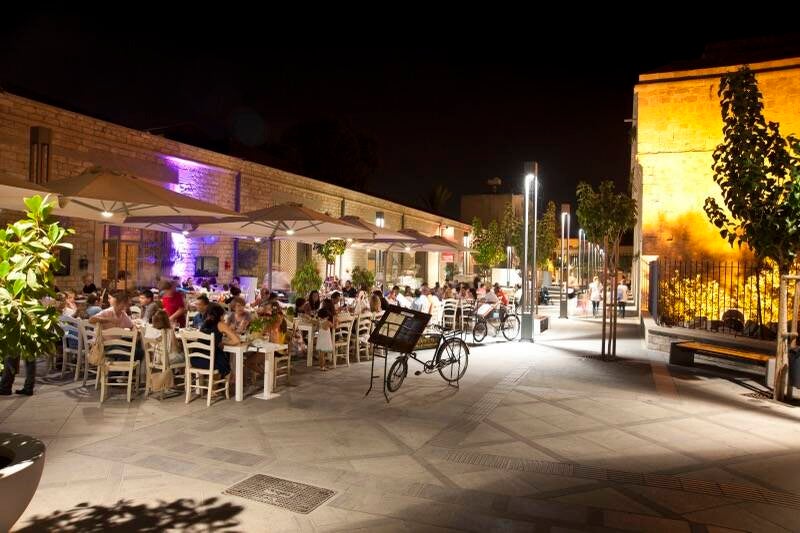
In September, the scent of grapes defines the Wine Festival, while the spring brings a riot of colour during the flower festivals. The undisputed highlight is the Carnival, a ten-day explosion of colour and music that takes place just before Lent. It justifies the local reputation of Limassolians as the most fun-loving people on the island, a community that balances high-stakes international business with an ancestral devotion to the party.
The Pulse of the Palace
This is an experience that isn’t generally on the tourist trail. The Cabinet Room of the Presidential Palace in Nicosia is a weighty experience. On the way, there’s a visit to the Venetian Walls, the historic Ermou Street, and the very tech-savvy QR codes that bring the sights and the ancient stones to life in twelve languages. Old and new, Nicosia remains a city of contrasts. It is the world’s last divided capital, yet it hums with the energy of a growing regional tech hub. Cyprus is pulling out the stops to keep the tourism economy on track, no matter what circumstances throw at the island.
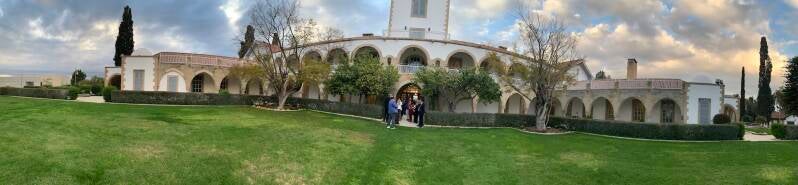
So, business attire mandatory, we were met by Mrs Irene Piki, Deputy Minister to the President, and Mr Constantinos Letymbiotis, the government’s spokesperson, both of whom were keen to peel back the diplomatic curtain. On the agenda are water, sustainability, renewable energy and solar storage systems. For the modern traveller, this is peace of mind. This is a destination that isn't just consuming its resources but actively regenerating them. They’re rebranding Cyprus for a wider audience - moving from "sun and sea" to a wider, experiential, special once in a lifetime destination - that you can also return to for something new. It’s a refreshing take that says Cyprus understands its audience.
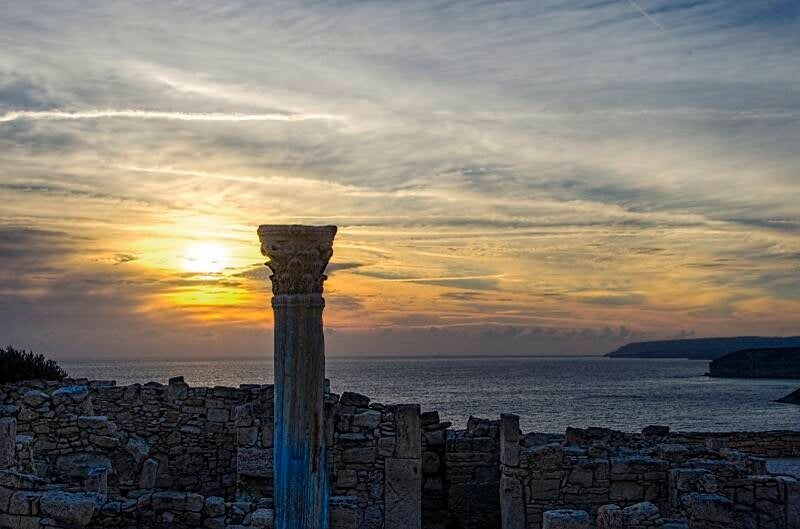
An island of participation
Cyprus for your next excursion makes sense on every level. It is an island of British electrical sensibility (three-pin plugs!), Mediterranean flavour, and a resilience that is frankly inspiring. It is a destination that balances high-end infrastructure, like the Limassol Marina, with the rugged, unvarnished charm of the Troodos peaks.
Headed back to Larnaca Airport, past the cream-coloured limestone mansions and the well-kept roads that do their best impression of dusty island trails, I realised that Cyprus isn't just a place to visit. It’s a place in which you participate. Whether you’re picking strawberries in Deryneia, tiling mosaics in Paphos, or simply walking the shore paths in Limassol, you won't just see the island—you’ll feel it.
The "Two Faces of Aphrodite" are always present. There is the goddess of the seafoam—the glossy, luxury marina version. And there is the goddess of the rock—the rugged, protective, ancient version. The magic of Cyprus is that it doesn't choose between them. It simply adds another layer to the mosaic, proving that modern Cyprus is far more than just a place to haggle for towel-space on the sand.
The "Grand Tour" Snapshot
- Accommodation: The Four Seasons Limassol is your prestige base.
- Accessibility: Most UNESCO sites in Paphos are now fully accessible with upgraded paths and QR code guides.
- Unique Selling Point: The "Sun, Sand, and Ski" trifecta. Yes, you can literally ski in the Troodos in the morning and swim in the Mediterranean by 3 pm.
- The Workshop Factor: "The Place" (Paphos) and "Sofia’s House" (Letymbou) provide the hands-on engagement that modern travellers crave.
- Connectivity: 55 airlines and counting—Cyprus has never been easier to reach in the post-2025 landscape.
- Official Info: Visit visitcyprus.com for the latest travel updates and practical details.
Add comment
Comments